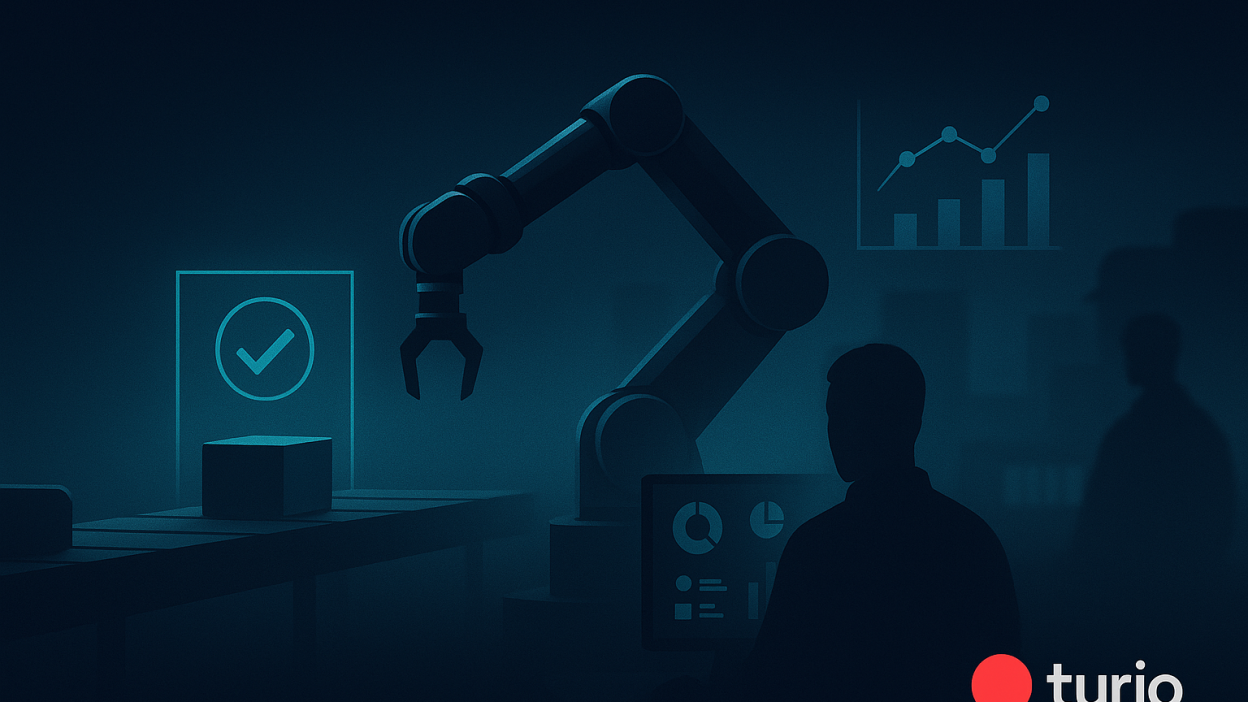
Manufacturing Meets AI: Robots, Vision, and Predictive Brains on the Factory Floor
A joint MIT–Boston University study projects that up to two million manufacturing jobs could be automated by 2025, mostly the repetitive, muscle-memory kind. That sounds scary until you look closer: the work isn’t vanishing, it’s changing shape toward robotics maintenance, AI oversight, and data fluency.
The Business Case (That Actually Adds Up)
Manufacturers adopting robotics, computer vision, and predictive analytics report three things that finance teams love: faster cycles, fewer defects, and slimmer operating costs. In plain numbers, it’s common to see 10–30% higher throughput, 20–50% defect reduction, and maintenance savings when failures are predicted instead of endured.
Is it uniform? Nope. Results vary by line complexity, data hygiene, and worker adoption. But when plants pair tech with training, the ROI curve bends upward quickly.
Signal to watch: real-time AI “coaches” for operators surfacing anomaly hints, setup suggestions, and likely root causes during the shift, not after the postmortem.
Humans + Cobots: The Hybrid Shift
Forget the “robots versus humans” headline. The modern line pairs operators with cobots, where AI guides the tempo and people apply craft, context, and common sense. An operator can tweak a jig, watch a live vision overlay, then nudge the cobot path right there on the HMI while predictive models recalc in the background.
“The win isn’t replacement it’s redesign. Jobs are being rebuilt to mix human creativity with machine precision.”
Result? Higher productivity and surprise better job satisfaction. Boring repetition fades; judgment and collaboration take center stage.

Sector Snapshots: Where AI Pays Off
Automotive
Computer vision catches paint defects and weld porosity that the naked eye misses. Predictive models flag torque-tool drift before scrap piles up. Plants report faster changeovers as robots load programs per model variant no more frantic re-teaching between trims.
Electronics
High-speed lines thrive on AI. Vision systems read micro-solder quality; anomaly detection stops ghost failures. Traceability tightens as AI correlates feeder behavior, humidity, and reflow curves pinpointing why a lot went sideways.
Pharma
In sterile filling and packaging, vision prevents mislabeling and micro-particle surprises. Predictive maintenance keeps critical utilities steady. And yes, cobots can work in cleanrooms with validated recipes and careful risk controls.
The Skills Gap Is Real and Fixable
Here’s the rub: technology moved faster than training plans. Many plants now need technicians who can swap an end effector, read a data trend, and talk safety interlocks without blinking.
This is where Turjo steps in. Targeted programs cover AI fundamentals for operators, IoT integration for engineers, and human–robot collaboration for supervisors. Short sprints, hands-on labs, real machines not slides you’ll forget by Thursday.
- Robotics maintenance: zeroing, calibration, path edits, and rapid recovery.
- AI system oversight: interpreting model confidence, retraining triggers, and audit trails.
- Data analysis: OEE signal hygiene, anomaly alerts, and practical SPC.
- Safety + collaboration: cobot risk assessments and change control done right.

Your 6-Step AI Playbook (No Buzzwords, Just Moves)
- Pick one high-friction process. Think defect hotspots or overtime hogs. Start there.
- Instrument first. Sensors, cameras, clean data tags. If the data’s messy, the model will be too.
- Trial a cobot cell. Keep cycle time honest. Design the handoff between human and robot deliberately.
- Close the skill loop. Schedule micro-trainings during ramp not months later.
- Quantify weekly. Throughput, scrap, downtime. Share the chart where the work happens.
- Scale with discipline. Standard kits, repeatable recipes, and honest retros.
Don’t Leave People Behind
AI should lift the whole line, not just the balance sheet. That means tuition support, paid learning hours, and clear pathways from operator to tech to engineer. It also means measuring fairness who gets access to training, who gets promoted, who gets heard.
Plants that fund reskilling early avoid the worst churn. And morale? Noticeably better when people see a future for themselves, not just for the machines.