Loan officer marketing with AI works when the system sends fewer, better-timed messages and a person approves what goes out. Most loan officer marketing does not fail for lack of leads. It fails after the lead arrives, and AI makes that worse when all it does is send more messages, faster.
I have traced lead flows where a form hits an inbox, the CRM creates a contact and a separate tool drafts a reply. Each piece works alone. The trouble starts when nobody can tell which system owns the next response, or whether the borrower already replied.
This is for US loan officers, mortgage brokers and small mortgage teams. I cover the system I wire up, where human approval sits, how opt-outs work, and what I have seen break.
Where does loan officer marketing lose leads after they arrive?
Borrowers come in from ads, portals, referrals and the website. Each lands somewhere different. A referral arrives as a text and never enters the pipeline. Someone replies to an old email while another tool keeps sending reminders. The lead exists, but nobody owns the response.
When I look at a mortgage lead generation setup, I trace one inquiry from start to finish instead of judging the channel. I want answers to six questions:
- Entry point: Where did the borrower first make contact?
- Lead record: Which system stores the inquiry?
- Owner: Who is responsible for the next action?
- History: Can the loan officer see what was already sent?
- Consent: What contact did the borrower agree to?
- Exit: What stops the automation when the conversation changes?
If those answers are unclear, AI just adds another moving part. I treat lead ownership as an engineering problem before follow-up becomes a writing problem.
What should honest lead capture record before follow-up begins?
A good form tells the borrower why you are asking and what contact will follow. If someone asks for a consultation, the form should not quietly turn that into permission for unrelated marketing.
I store these with the lead record:
- Source: The form, referral, ad or page that produced the inquiry.
- Request: What the borrower actually asked about.
- Channel preference: How they want to be contacted, if they said.
- Consent record: The wording they agreed to, where it was captured and when.
- Owner: The person responsible for the inquiry.
- Contact status: Allowed, paused or stopped.
Consent has to be a working field in the workflow, not a checkbox that disappears after submit. I capture that evidence before turning on any automation.
The rules point the same way. The FTC CAN-SPAM compliance guide says commercial email needs a clear way to opt out and that opt-out requests must be honored promptly. The FCC guide to robocall and robotext rules says autodialed or prerecorded calls and texts to a mobile number need prior consent, that commercial texts need written consent, and that people can opt out at any time in any reasonable way. This is general information, not legal advice. Confirm your own practices with your compliance team or counsel.
How do you give the CRM ownership of every lead?
I make the CRM the source of truth for where each lead stands. Forms, email, texting and AI tools can stay separate, as long as they all read and update the same record.
A mortgage crm setup needs one owner per lead and a short list of stages:
- New inquiry: Arrived and waiting for review.
- Contact pending: An approved reply is queued or awaiting an answer.
- In conversation: Borrower and loan officer are talking.
- Needs a person: The next question needs professional judgment.
- Ready to apply: Handed to the team’s application process.
- Paused or closed: No automatic follow-up.
I keep stages separate from delivery status: a delivered message does not mean interest. AI can suggest a stage change or flag a conversation, but a person owns decisions about the borrower’s next step.
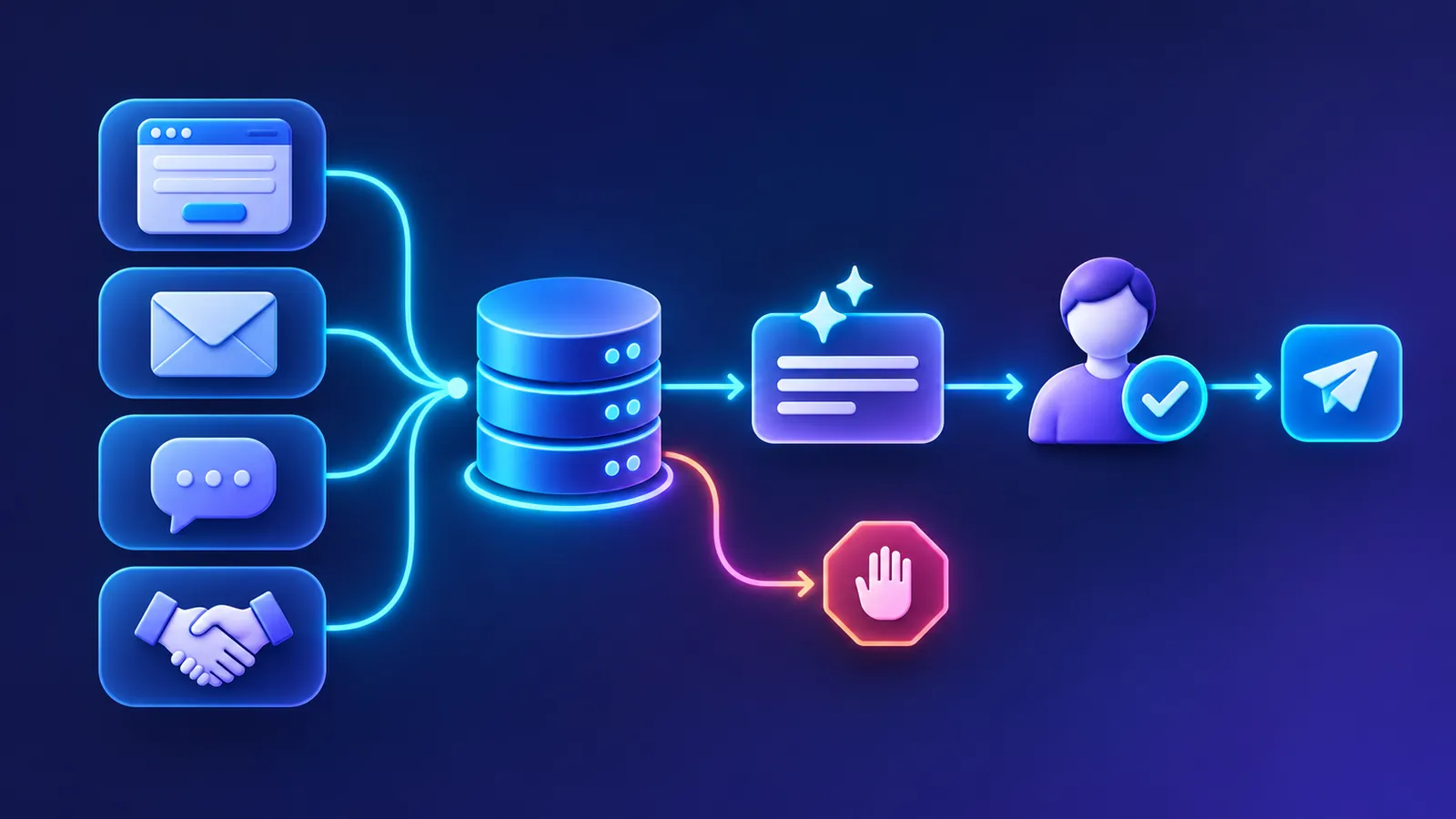
That is the core of my CRM integration and connected business systems work: connecting the tools a team already has around one shared record, not adding another dashboard. The same pattern works for ai for real estate agents, but mortgage follow-up needs extra care around consent, financial questions and approval.
Is your follow-up running on three tools that don’t talk to each other? I can map where your leads enter, who owns each reply, and where approval and opt-out safeguards belong. Book a conversation
How do you follow up without wearing borrowers out?
I start by defining when a message should not go out. A borrower who replied does not need another automated intro.
My sequence pattern is short:
- Acknowledge: A brief reply tied to what the borrower asked, on the channel they used.
- Wait for a real event: A reply, an approved stage change or a scheduled check-in.
- Recheck the record: Owner, consent, channel and opt-out status, every time.
- Draft only with a reason: No touch without something useful to say.
- Stop on change: A reply, a stop request or a question that needs a person ends the sequence.
Silence and a stop request are different. Silence can lead to a pause under a rule the team agreed on. A stop request needs a suppression every connected tool respects. I do not read silence as permission to message more often.
The general framework is in my earlier post on orchestrating AI touchpoints without annoying prospects. Here I apply it to mortgage follow-up, where consent and financial questions add constraints.
Why should a person approve AI-written mortgage messages?
AI is useful for a first reply, a conversation summary, or turning a loan officer’s notes into a draft. It is not the right tool for statements about a borrower’s finances. An AI draft should not tell a borrower they qualify, imply approval, or state loan terms. Those answers belong to a licensed person who can review the file.
So I put approval between drafting and delivery. The model drafts; the loan officer decides.
| Follow-up step | What the AI does | What a person approves or owns |
|---|---|---|
| Capture | Organizes the inquiry and flags missing details | Form wording, consent capture and lead owner |
| First response | Drafts a short reply based on the inquiry | The content, the channel and the send |
| Qualification questions | Suggests questions without judging eligibility | Which questions to ask and what answers mean |
| Nurture touch | Drafts a follow-up using the record’s context | Timing, relevance and whether to continue |
| Rate or terms question | Flags it for a person and does not answer | The actual answer and any required review |
| Opt-out | Detects stop requests and starts suppression | Unclear requests and checking suppression held |
| Handoff to application | Summarizes the conversation for the handoff | Readiness, next steps and the application |
Approval has to be a real control. If the borrower replies, opts out or changes stage while it waits, the system rechecks the record before anything goes.
Voice needs the same care. In February 2024 the FCC confirmed that AI-generated voices count as “artificial” under the Telephone Consumer Protection Act, so AI voice calls need the same consent as other artificial-voice calls. Again, general information only; have your compliance team or counsel review your calling and messaging.
What breaks when approval and opt-outs are not connected?
The failures I see are ordinary integration problems, not dramatic AI mistakes:
- Duplicate sequences: A CRM import recreates existing contacts and restarts their automation.
- Opt-out drift: The texting tool records a stop, the CRM still shows the contact as eligible, and another tool sends a message.
- Overconfident drafts: An AI draft sounds sure about rates or approval when nothing in the record supports it.
I design against each one:
- Duplicate checks: Match the lead and check sequence enrollment before starting anything.
- Shared suppression: One opt-out stops email, text and calls, recorded centrally so no other sequence restarts.
- Fresh checks: Recheck the record right before sending.
- Activity logs: Record each draft, approval, send, reply and stop.
- Fail closed: Pause contact when a consent or sync check fails.
A borrower should not have to say stop to each tool separately.

This is how I built RealtyCTL, NextCTL’s brand for real estate agents and loan officers. It covers lead capture funnels, CRM automation, follow-up sequences and reporting, with human approval on outbound sequences, delivery monitoring and opt-out handling in every flow. It wraps the tools a team already uses instead of replacing them. The RealtyCTL case study explains the build; results are not published. It reflects how I approach production systems at NextCTL: generating a message is the easy part, controlling what happens after is the work.
Where should a small mortgage team start?
Not with every lead source. Start with one source, one short sequence and approval switched on, and review the logs every week.
- One lead source connected first.
- Consent wording and request context stored with each lead.
- One owner assigned to every new inquiry.
- CRM stages decide whether follow-up is allowed.
- The first sequence has only a few purposeful touches.
- Messages go out on the channel the borrower chose and consented to.
- A person approves every outbound AI draft.
- Rate, eligibility and application questions go to the loan officer.
- Opt-outs stop contact across every connected tool.
- Imports cannot restart sequences.
- Drafts, approvals, replies, failures and stops are reviewed weekly.
- The loan officer can take over with the full conversation history.
The trade-off: approval adds work and can slow a reply. I would accept that before letting a model make unsupported claims to a borrower.
Key takeaways
- Most follow-up problems start with split lead ownership, not a shortage of AI tools.
- Consent and contact preferences need to travel with the lead record.
- The CRM owns lead state; AI drafts and a person approves.
- An opt-out has to stop every connected sequence, not just the tool that received it.
- Start narrow, keep approval on and read the logs every week.
If you want your lead capture, CRM and follow-up wired together with approval and opt-outs built in, Book a conversation. You can also subscribe to The Production Notes, my newsletter with one practical post a week, using the signup box below this post.
FAQ
What is loan officer marketing?
Loan officer marketing is how a loan officer attracts borrowers, answers inquiries and builds relationships that lead to applications and referrals. In this post I focus on what happens after an inquiry arrives. A good follow-up system connects the lead record, the responsible loan officer, the borrower’s consent and approved messages, so borrowers get relevant contact instead of scattered reminders.
Can AI write follow-up messages for loan officers?
Yes. AI can draft acknowledgments, suggest qualification questions, summarize conversations and prepare follow-ups from the lead record. I keep a person approving outbound messages, especially anything touching loan terms or eligibility. AI should not tell a borrower they qualify or present approval as likely. Those answers belong to the loan officer after reviewing the borrower’s actual information.
How do you handle opt-outs in mortgage follow-up?
Record the request, stop outreach, and sync the opt-out across every connected email, text and calling tool so no other sequence restarts. Keep an activity record so the team can check what happened. The rules differ by channel, so treat this as general information and confirm your process with your compliance team or counsel.
Do loan officers need a mortgage CRM for automated follow-up?
No specific product is required, but automated follow-up needs one reliable central record for lead owner, contact status, consent and conversation history. I usually make the CRM that record because it gives the loan officer one clear view of each borrower. Separate tools can still handle forms, drafts and sending, as long as they stay in sync.