
Tech companies may build the AI tools. But service businesses are positioned to operationalize them faster because their daily work is full of conversations, documents, repeatable decisions, and revenue-connected workflows.
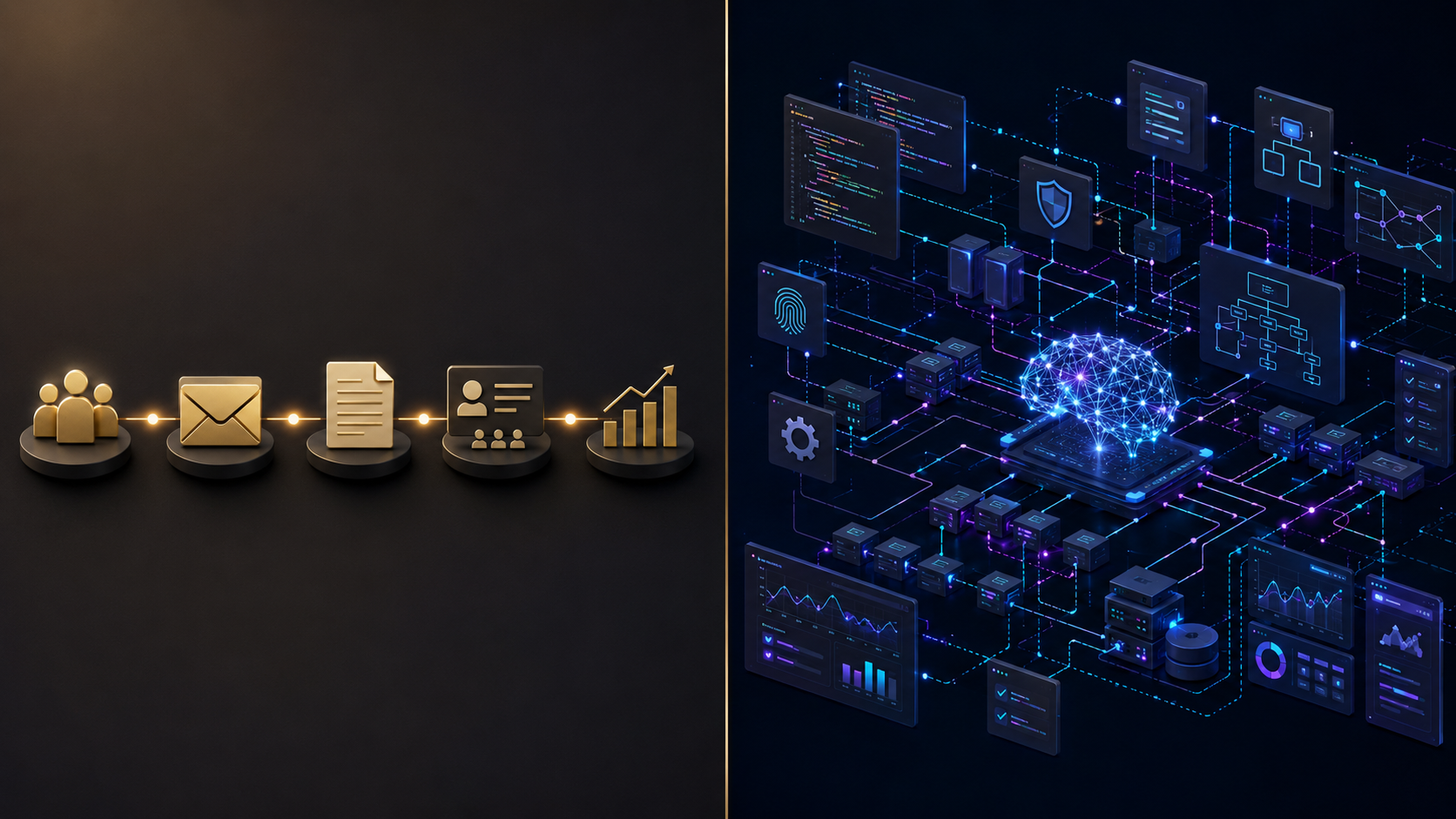
Image placeholder 1: A service business founder using an AI workflow dashboard across email, CRM, documents, and customer support.
The common assumption is simple: tech companies understand technology, so they will adopt AI first. I think that assumption misses the real story.
The fastest adopters may not be the companies that understand AI the deepest. They may be the companies where AI solves the most obvious daily pain.
A service business does not need to reinvent artificial intelligence. It needs to answer faster, follow up better, produce documents quicker, reduce manual admin, and serve customers more consistently.
The big idea: Tech companies will lead in building AI. Service businesses may lead in turning AI into an operating model.
AI fits the natural shape of service work
Most service businesses are built on language and coordination. They write proposals. They answer questions. They summarize meetings. They prepare reports. They collect details from clients. They follow up on leads. They explain processes. They schedule appointments. They turn messy customer conversations into structured next steps.
This is exactly where modern AI tools are useful. They are not only chatbots. They are assistants for turning unstructured communication into repeatable work.
Where AI naturally fits
- Messages and calls: AI can summarize, classify, and route customer intent faster than a manual inbox process.
- Documents and proposals: AI can draft first versions, extract information, and reduce repetitive writing work.
- Reports and follow-ups: AI can create consistent next steps, reminders, and client-ready summaries.

Image placeholder 2: Emails, calls, forms, and documents flowing into AI and becoming structured business outputs.
The ROI is easier for service businesses to feel
AI adoption accelerates when the benefit is obvious. For a service business, the benefit is not abstract. It often shows up as hours saved, more leads contacted, faster proposals, fewer missed inquiries, better client communication, cleaner reporting, and less founder chaos.
The owner does not need to understand model architecture. The owner needs to know whether the business replied faster, followed up better, reduced manual work, and delivered a smoother client experience.
That is the advantage. Service businesses can connect AI to daily revenue work quickly.
Practical first use cases
- Lead response assistant: Draft replies, qualify inquiries, and route prospects into the right follow-up path.
- Proposal generator: Turn discovery notes into polished proposals, scopes, timelines, and next steps.
- Client update system: Summarize project progress and prepare weekly client-ready updates.
- Internal knowledge assistant: Answer questions from SOPs, policies, pricing notes, and service documentation.
Tech companies have a harder adoption problem
This sounds counterintuitive because tech companies are full of technical people. But that is part of the friction.
Developers, product teams, security teams, and engineering leaders have to think about accuracy, architecture, code quality, user data, permissions, testing, compliance, monitoring, product experience, and long-term maintainability.
That caution is not weakness. It is necessary. But it slows full adoption.
A wrong paragraph in a draft email is easy to fix. A wrong architectural decision, insecure code suggestion, or broken production workflow can be expensive.
Service business adoption vs tech company adoption
| Adoption factor | Service businesses | Tech companies |
|---|---|---|
| First use case | Email replies, proposals, reports, lead follow-up, customer support | Code generation, product features, developer tools, data systems |
| Risk level | Often human-reviewed and workflow-level | Often production-facing, security-sensitive, or architecture-dependent |
| Speed to value | Visible through admin savings, faster response times, and cleaner client communication | Requires engineering review, QA, integration, governance, and trust checks |
| Main blocker | Lack of workflow design and implementation support | Trust, security, maintainability, data access, and product complexity |
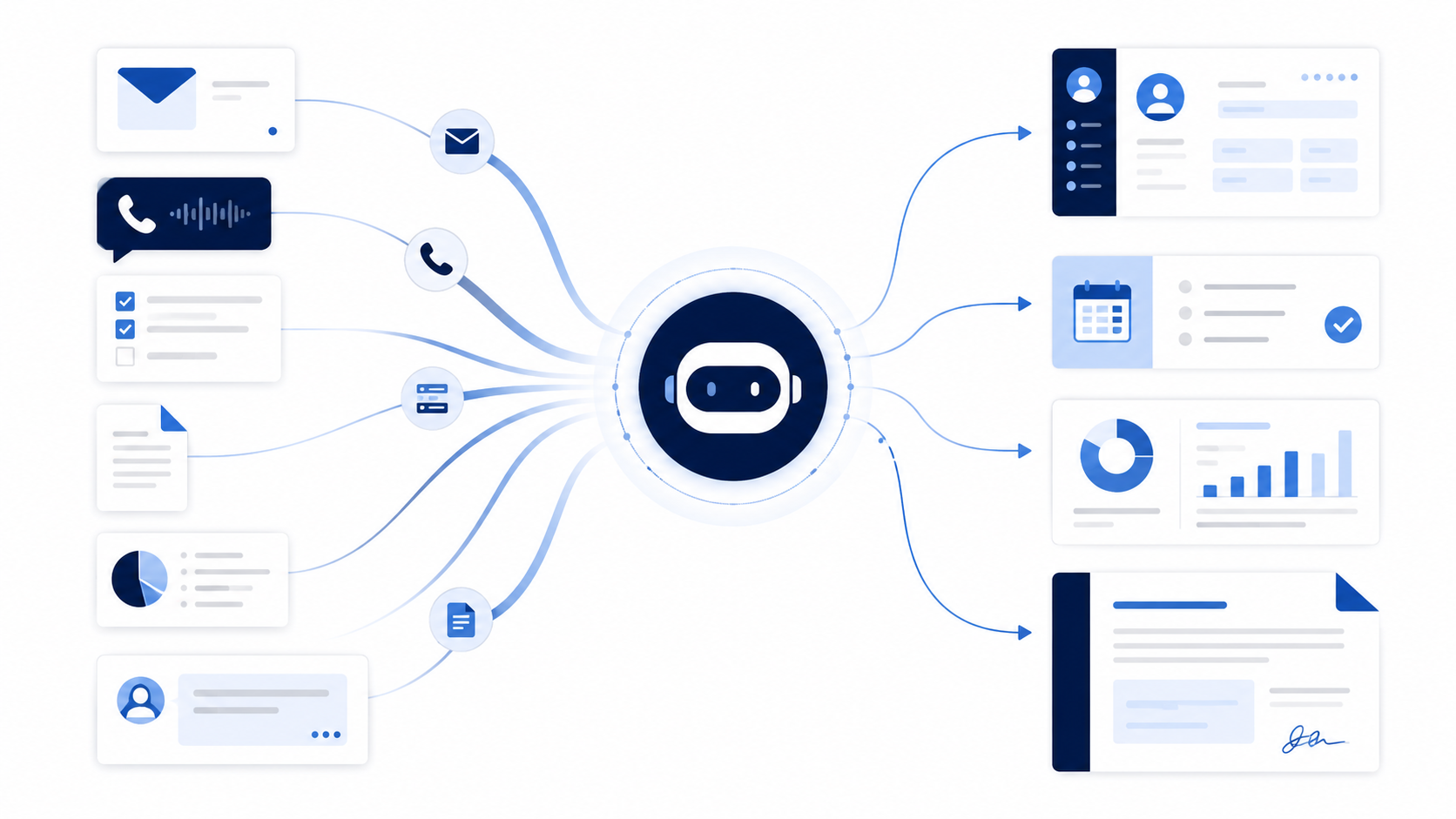
Image placeholder 3: Side-by-side comparison of service business AI workflows and tech-company AI integration complexity.
Service businesses do not need AI transformation. They need workflow transformation.
The mistake many businesses make is treating AI like a separate tool. They open ChatGPT, ask a few questions, generate a few captions, and say they are using AI.
That is experimentation, not transformation.
The real shift happens when AI becomes part of the workflow.
Lead comes in. AI summarizes and qualifies it. The CRM is updated. A reply is drafted. A task is assigned. A follow-up is scheduled. A client update is generated. Performance is reported.
That is not a fancy future. That is an operating system for service delivery. And service businesses are full of workflows like this.
The adoption curve will favor operators, not just technologists
AI is not only a technology story. It is an operations story. The winners will be the businesses that redesign work around AI, not the ones that simply buy the most tools.
Tech companies will continue moving fast with AI inside software development. But service businesses have a different advantage: they can apply AI to the whole business without needing to change a software product first.
The practical adoption pattern
- Personal productivity: Owners and staff use AI for writing, summarizing, planning, and research.
- Team workflows: AI becomes part of CRM, support, reporting, SOPs, and internal handoffs.
- Operating model: The business runs with AI-assisted sales, delivery, admin, and decision systems.
The next AI advantage will not belong only to companies that build software. It will belong to businesses that redesign how work gets done.
What service businesses should do now
The smartest move is not to chase every new AI tool. The smartest move is to identify repetitive, revenue-connected workflows and redesign them one by one.
- Map one painful workflow. Choose a process that happens every week and creates delay, confusion, or manual effort.
- Identify the AI-friendly parts. Look for writing, summarizing, extracting, classifying, routing, drafting, and reporting tasks.
- Keep humans in the loop. Use AI to prepare, organize, and accelerate work, not to remove accountability.
- Measure operational payoff. Track response time, saved hours, proposal speed, follow-up rate, or client satisfaction.
Final thought
Tech companies will continue to build powerful AI products. But service businesses may adopt AI faster where it matters most: inside daily operations.
They have the right kind of work: messy communication, repeated processes, human review, client expectations, admin overhead, and clear revenue outcomes. That is the perfect environment for practical AI.
The future will not be won by the business that says, “We use AI.” It will be won by the business that can say, “Our workflow is faster, cleaner, and more consistent because AI is built into how we operate.”